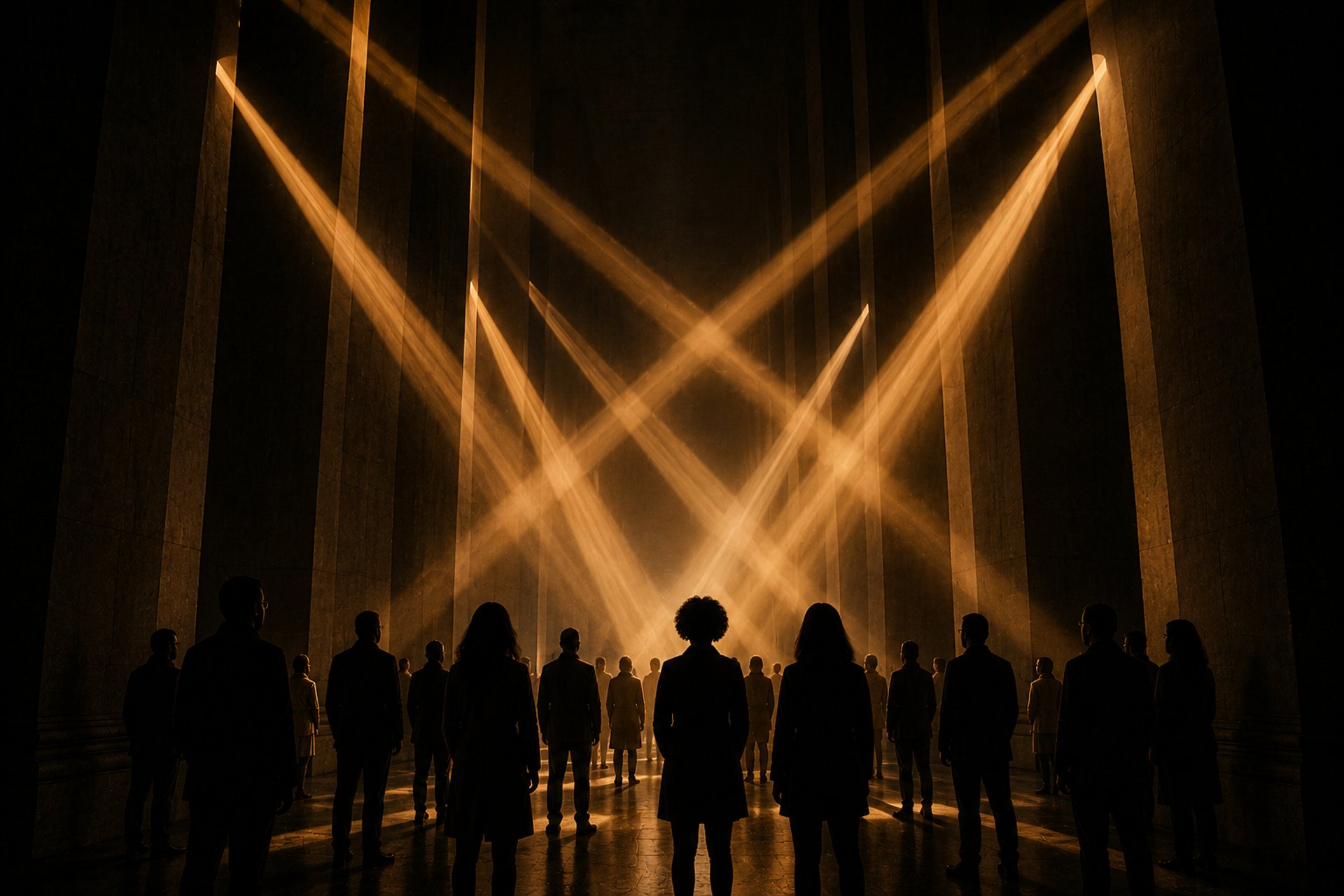
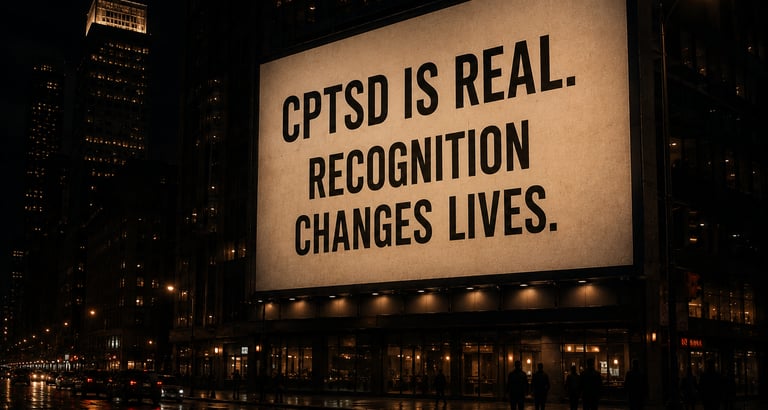
CPTSD RECOGNITION MATTERS
Complex PTSD is recognized by the World Health Organization (WHO) through the International Classification of Diseases (ICD-11), which is used in many countries around the world.
However, Complex PTSD is not currently recognized as a distinct diagnosis within the Diagnostic and Statistical Manual of Mental Disorders (DSM), which is widely used throughout the United States.
While recognition alone does not solve every challenge survivors face, it can influence how Complex PTSD is understood, researched, taught, diagnosed, treated, and supported.
Recognition helps create a shared language for understanding the impact of prolonged and repeated trauma.
RECOGNITION DOES NOT MEAN ENDORSEMENT
Recognition can matter within a system even when that system itself is being questioned.
There are significant and longstanding criticisms of the DSM and of the broader mental health systems built around psychiatric diagnosis.
These include concerns about the pathologization of understandable responses to trauma, the limitations of diagnostic categories, and whether diagnostic frameworks adequately account for the context of what happened to a person.
These concerns are important. They also do not eliminate the practical consequences of diagnostic recognition within the United States. The DSM continues to hold substantial influence within U.S. mental healthcare. It affects how mental health professionals are educated, how symptoms are conceptualized, which diagnoses are made, what is researched, and how people are understood within healthcare systems.
For people living with Complex PTSD, this creates an important distinction:
Questioning the DSM as a system and advocating for recognition of CPTSD within the systems that currently exist are not mutually exclusive positions.
The absence of recognition does not remove the influence of the DSM. People with complex trauma must still navigate healthcare systems shaped by it. This is one reason the conversation about CPTSD recognition in the United States cannot be separated from the systems in which survivors currently receive care.
TWO THINGS CAN BE TRUE AT THE SAME TIME.
The systems used to understand and diagnose trauma can need significant change.
AND people living with Complex PTSD can need greater recognition within those systems today.
Recognition should not be understood as an endorsement of every aspect of the diagnostic system.
It is part of a much larger conversation about how complex trauma is understood across healthcare, research, professional education, public policy, and society.
Why Recognition Matters
Recognition can influence:
Public awareness and understanding
Professional education and training
Research priorities and funding
Access to appropriate care and support
How survivors understand their experiences
How systems respond to complex trauma
When Complex PTSD is not widely recognized or understood, survivors may face misunderstanding, stigma, barriers to care, and difficulty finding information that reflects their experiences.
A Growing Movement
Awareness of Complex PTSD has grown significantly over the past decade.
Researchers, clinicians, survivors, educators, advocates, organizations, and communities around the world are helping increase understanding of Complex PTSD and its impact.
Recognition is not advanced by one person or one organization alone. It happens when people come together to increase awareness, share knowledge, elevate research, and advocate for change.
Recognition Is Bigger Than a Diagnosis
Recognition influences far more than diagnostic language.
It affects how professionals are trained, how research is funded, how systems understand trauma, how survivors make sense of their experiences, and how support is provided across healthcare, education, workplaces, and communities.
For many survivors, recognition represents visibility, validation, understanding, and the possibility of better support for future generations.
That bridges the educational section into the action section beautifully.
Ways to Support CPTSD Recognition
There are many ways to get involved, and participation is always optional.
Choose what feels right for your capacity.

Sign the CPTSD Recognition Petition
Help demonstrate public support for greater recognition and understanding of Complex PTSD.


Join the CPTSD Alliance
The CPTSD Census is an annual community research project that helps elevate survivor experiences and generate data about the realities of living with Complex PTSD.
Community participation helps strengthen understanding and inform future education, advocacy, and research efforts.
Participate in Research
The CPTSD Alliance is a coalition of survivors, professionals, researchers, educators, advocates, organizations, and supporters working together to advance awareness, recognition, education, research, and systems change related to Complex PTSD.


Participate in CPTSD Awareness Month
Recognition is a long-term effort.
Stay connected for updates on awareness campaigns, research, educational resources, community projects, and future opportunities to get involved.

Stay Informed
Meaningful change takes time, effort, and resources. Financial contributions help sustain the education, research, awareness, and advocacy initiatives that support greater recognition and understanding of Complex PTSD.
Every contribution helps move the work forward.

Support the Movement through a Donation
Each September, individuals and organizations around the world come together to increase awareness and understanding of Complex PTSD.
Whether you share resources, attend events, participate in campaigns, or simply help spread awareness, every action contributes to the movement.
Capacity Matters
We recognize that many people affected by Complex PTSD have limited energy, time, or emotional capacity.
You do not need to advocate publicly to belong here.
Learning, healing, resting, and protecting your well-being are all valid choices.
Every contribution—whether visible or quiet—has value.
Looking for Community?
Advocacy and awareness are important—but so is support.
If you're living with Complex PTSD and looking for connection, resources, peer support, or a community that understands the realities of complex trauma, we invite you to explore the CPTSD Hub.
The CPTSD Hub is a survivor-centered community created for people impacted by Complex PTSD to connect, learn, share experiences, and support one another in a trauma-aware environment.
This Educational Website is an awareness program of The Healing and CPTSD Foundation. EIN: 99-2268743
The Healing and CPTSD Foundation is a 501c3 nonprofit organization dedicated to advancing awareness, education, research, and recognition of Complex PTSD. Our educational resources are informed by current trauma research, clinical literature, lived experience, and ongoing community-based data collection.
We do not provide crisis care, crisis intervention or professional therapeutic services. In the event of a crisis, please contact a crisis hotline, local crisis resource, or your healthcare provider immediately. All participants and members are encouraged to seek and maintain appropriate professional care from licensed mental health and medical providers. Our programs provide community-based peer support and are not a substitute for professional therapy or medical treatment. Participation requires that individuals are medically and mentally stable.
Nothing on this website or any associated The Healing and CPTSD Foundation website or platform, is a replacement for or supersedes the direction of your medical or mental health provider, nor is anything on this or any associated The Healing and CPTSD Foundation website or platform a diagnosis, treatment plan, advice, or care for any medical or mental health illness, condition, or disease.
The content provided is for informational and educational purposes only and is not intended to replace professional guidance from your healthcare providers. The Healing and CPTSD Foundation disclaims all responsibility for actions taken based on information provided on this site or through our programs. The Healing and CPTSD Foundation and its affiliates, officers, directors, employees, volunteers, and agents are not liable for any direct, indirect, incidental, consequential, or punitive damages arising out of your use of, or participation in, our programs and website.
Users are solely responsible for their actions and decisions, and should consult with their healthcare providers before making any changes based on the information provided. Mention of specific products, services, or therapists does not imply endorsement by The Healing and CPTSD Foundation. The content is intended for adults 18 years and older. By using our website and programs, you agree to these terms. Please review our Terms and Conditions /Privacy Policy for more information. We reserve the right to update this disclaimer and encourage periodic review.T he Healing and CPTSD Foundation reserves the right to update this disclaimer at any time. Users are encouraged to review it periodically for any changes.
COMPLEX PTSD