
If You’re a Professional
A CPTSD-Informed Perspective on What Professionals Often Gets Wrong
Many professionals encounter people with CPTSD regularly — often without realizing it.
Because CPTSD has been inconsistently recognized and unevenly taught, survivors are frequently assessed, treated, or supported through frameworks that focus on surface-level symptoms rather than underlying trauma patterns.
This section exists to bridge that gap.
While trauma-informed approaches have increased awareness of trauma, professionals may still miss how prolonged and complex trauma shapes regulation, identity, relationships, and behavior over time. A CPTSD-informed perspective helps bring these patterns into focus.
For CPTSD, this distinction matters.
What You Might Be Missing as a Professional
CPTSD is not defined by a single symptom or diagnosis. It is defined by patterns shaped by prolonged trauma, often beginning in environments where safety, agency, and escape were limited.
When CPTSD is not fully understood, professionals may unintentionally:
focus on behaviors instead of survival adaptations
treat symptoms in isolation
underestimate the impact of relational and developmental trauma
misinterpret trauma responses as resistance, noncompliance, or personality
CPTSD-informed practice asks a different foundational question:
“How has trauma shaped this system, and how do we work with that reality?”
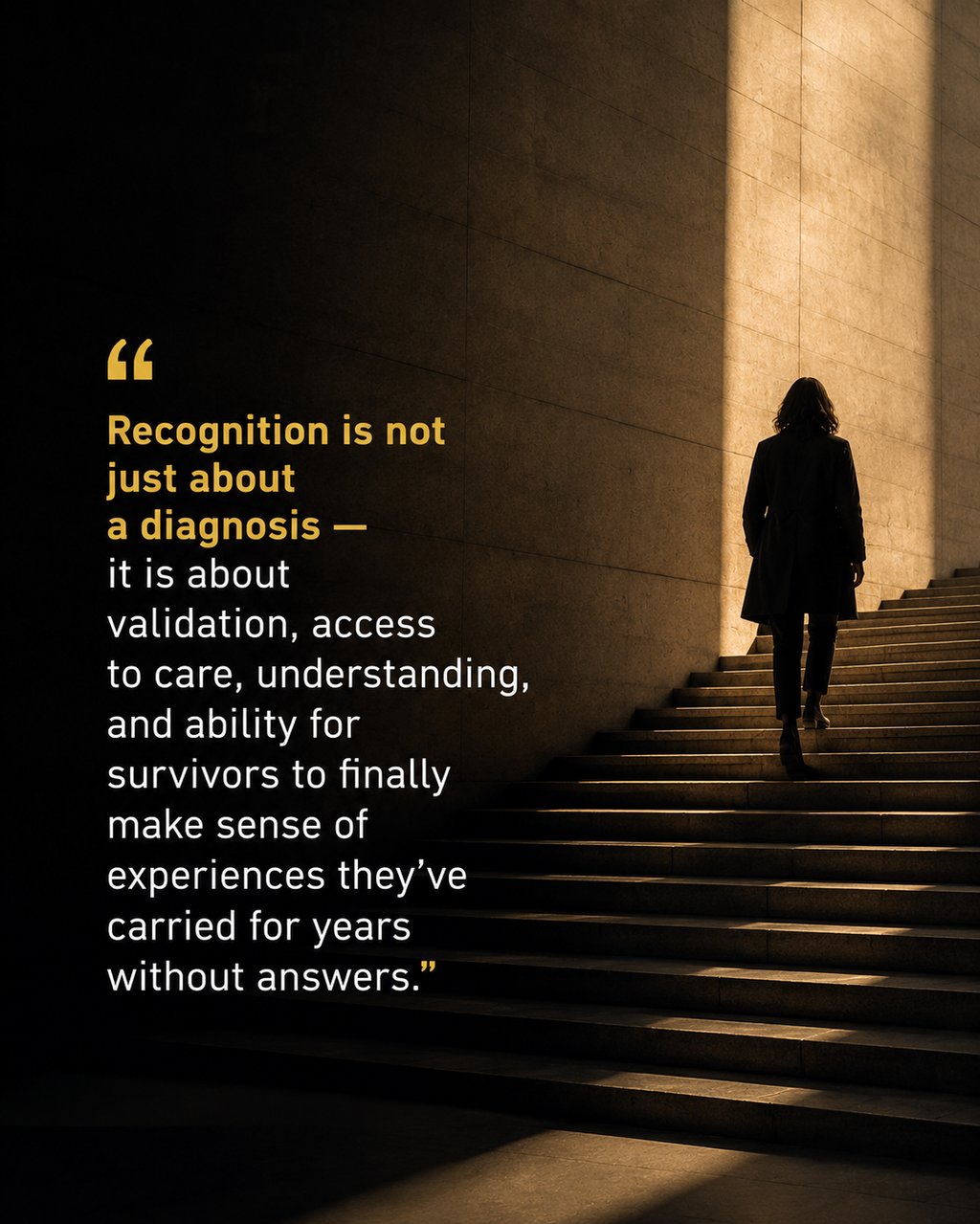
Common Oversights in Recognizing CPTSD
Professionals may overlook CPTSD when:
Trauma history is fragmented, minimized, or not disclosed
Symptoms do not fit a single diagnostic category
The person appears “high-functioning”
Emotional responses seem disproportionate or inconsistent
Shame, dissociation, or compliance mask distress
The focus is placed on regulation or behavior without context
CPTSD is often missed not because it is rare, but because it does not conform neatly to short-term, symptom-based models.
How CPTSD Often Shows Up in Professional Settings
In professional, clinical, educational, or organizational environments, CPTSD may present as:
Emotional dysregulation or sudden shutdowns
Difficulty with trust, authority, or power dynamics
Hypervigilance or sensitivity to tone, feedback, or unpredictability
Over-functioning, perfectionism, or people-pleasing
Avoidance, disengagement, or withdrawal
Dissociation or “checking out” under stress
Strong reactions to perceived rejection, criticism, or loss of control
Without trauma context, these responses are often mislabeled as:
lack of motivation
poor insight
behavioral issues
interpersonal difficulties
resistance or noncompliance
In reality, they are nervous-system-driven survival responses.

Why CPTSD-Informed Practice Matters
CPTSD-informed practice goes beyond simply recognizing that trauma exists. It acknowledges how chronic and complex trauma can shape a person's nervous system, relationships, sense of safety, and ability to engage with care, services, education, work, and support systems.
This means:
Recognizing that emotional and physiological regulation often precede learning, decision-making, and problem-solving.
Understanding that behavior may reflect a person's nervous system state rather than their intentions or motivation.
Applying knowledge of Complex PTSD when developing policies, procedures, communication strategies, and expectations.
Anticipating periods of fluctuation, stress, and dysregulation rather than expecting constant consistency.
Creating environments that reduce unnecessary stress, uncertainty, shame, and perceived threat.
Prioritizing safety, predictability, choice, collaboration, and respect.
Understanding that survivors may respond differently to authority, conflict, touch, questioning, or loss of control.
For people living with Complex PTSD, CPTSD-informed environments can significantly impact whether they feel safe enough to engage, participate, access support, and receive effective care.
This approach is not about lowering expectations. It is about creating conditions where people can access their strengths, abilities, and capacity more effectively.
What CPTSD-informed Practice Looks Like in Action
In CPTSD-informed practice, professionals:
slow down assessments and interventions
expect fluctuation rather than linear progress
normalize nervous system responses
focus on regulation and safety before insight
avoid framing trauma responses as character flaws
recognize that trust is built through consistency, not explanation
Avoid:
minimizing trauma
comparing suffering
interpreting trauma responses as character flaws
assuming compliance equals safety
focusing solely on behavior without context
These shifts reduce retraumatization and improve outcomes across systems.
Why This Matters Beyond the Individual
When CPTSD is misunderstood at a professional level:
survivors are blamed for adaptations
systems inadvertently reinforce harm
resources are misallocated
trust in care systems erodes
When CPTSD is understood:
care becomes more effective
engagement improves
harm is reduced
outcomes improve
survivors are met with dignity instead of judgement
systems functions more humanely
For Professionals Who Want to Learn More
If you’re interested in deepening your understanding of CPTSD:
Explore our CPTSD education resources
Review survivor-centered research and perspectives
Reflect on how systems — not just individuals — adapt to trauma
CPTSD literacy is not a specialty.
It is foundational to ethical, effective collective care for people.
CPTSD RESOURCE CENTER
JOIN THE FIGHT FOR RECOGNITION
SURVIVOR LED RESEARCH
CPTSD in Different Settings
Complex PTSD does not exist only in therapy offices or mental health settings.
People living with CPTSD interact with healthcare systems, schools, workplaces, legal systems, emergency services, community organizations, and countless other environments every day. As a result, professionals across many fields may encounter trauma-related adaptations without recognizing them as such.
The way CPTSD presents—and the impact it has—can look different depending on the setting. Understanding these differences can help professionals provide more effective support, reduce unintended harm, improve communication, and create environments where people feel safer to engage.
We are currently developing educational resources exploring CPTSD within a variety of professional settings.
Resources coming soon.


Mental Health Professionals
Title: “Recognizing CPTSD in Clinical Practice”
Healthcare Providers
Title: “CPTSD: What Every Provider Should Know”
Gynecologists
Dentists
Title: “Trauma in the Chair: CPTSD & Dental Care”
Title: "CPTSD-informed GYN: Understanding CPTSD in Care”
Title: “When Trauma Looks Like Noncompliance: Understanding CPTSD”
Law Enforcement
Educators & School Staff
Title: “CPTSD in the Classroom”
Title: “CPTSD & The Legal System: What You’re Missing”
Legal Professionals
(Lawyers, Court Staff, Judges)
Title: "Understanding CPTSD During Crisis Response"
First Responders (Firefighters, EMS, EMTs)
Help Advance CPTSD Recognition
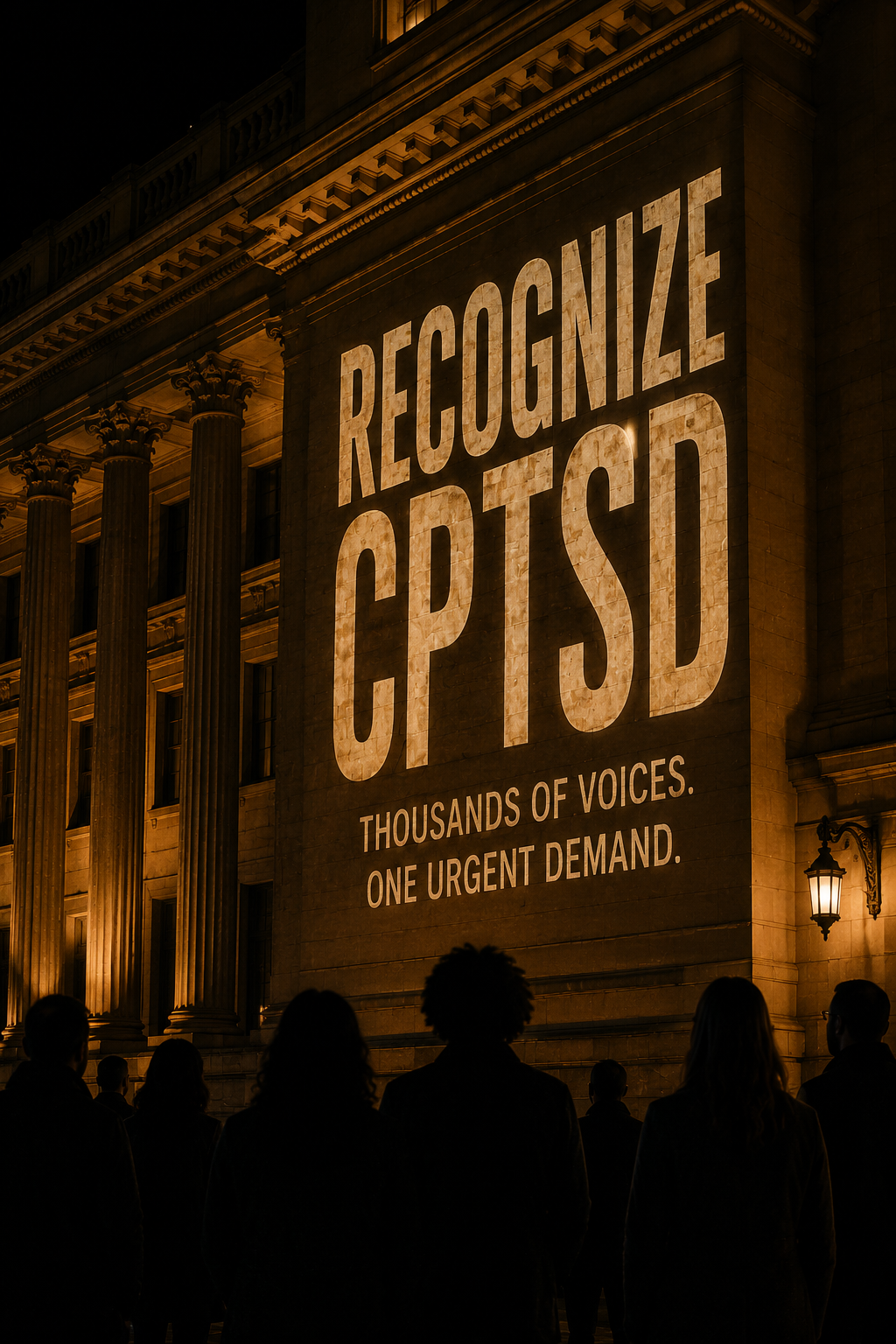
If you are a clinician, researcher, educator, healthcare professional, advocate, organization, policymaker, or community leader interested in advancing awareness and recognition of Complex PTSD, we invite you to explore the CPTSD Alliance.
The Alliance is a growing coalition working together to increase awareness, support education, elevate research, and advance meaningful systems change related to Complex PTSD.
This Educational Website is an awareness program of The Healing and CPTSD Foundation. EIN: 99-2268743
The Healing and CPTSD Foundation is a 501c3 nonprofit organization dedicated to advancing awareness, education, research, and recognition of Complex PTSD. Our educational resources are informed by current trauma research, clinical literature, lived experience, and ongoing community-based data collection.
We do not provide crisis care, crisis intervention or professional therapeutic services. In the event of a crisis, please contact a crisis hotline, local crisis resource, or your healthcare provider immediately. All participants and members are encouraged to seek and maintain appropriate professional care from licensed mental health and medical providers. Our programs provide community-based peer support and are not a substitute for professional therapy or medical treatment. Participation requires that individuals are medically and mentally stable.
Nothing on this website or any associated The Healing and CPTSD Foundation website or platform, is a replacement for or supersedes the direction of your medical or mental health provider, nor is anything on this or any associated The Healing and CPTSD Foundation website or platform a diagnosis, treatment plan, advice, or care for any medical or mental health illness, condition, or disease.
The content provided is for informational and educational purposes only and is not intended to replace professional guidance from your healthcare providers. The Healing and CPTSD Foundation disclaims all responsibility for actions taken based on information provided on this site or through our programs. The Healing and CPTSD Foundation and its affiliates, officers, directors, employees, volunteers, and agents are not liable for any direct, indirect, incidental, consequential, or punitive damages arising out of your use of, or participation in, our programs and website.
Users are solely responsible for their actions and decisions, and should consult with their healthcare providers before making any changes based on the information provided. Mention of specific products, services, or therapists does not imply endorsement by The Healing and CPTSD Foundation. The content is intended for adults 18 years and older. By using our website and programs, you agree to these terms. Please review our Terms and Conditions /Privacy Policy for more information. We reserve the right to update this disclaimer and encourage periodic review.T he Healing and CPTSD Foundation reserves the right to update this disclaimer at any time. Users are encouraged to review it periodically for any changes.
COMPLEX PTSD