
CPTSD SYMPTOMS & COMMON SURVIVOR EXPERIENCES
A Comprehensive look at How CPTSD Shows Up, and How Healing Begins
Complex PTSD (CPTSD) develops in response to prolonged, repeated trauma, especially trauma that occurred in environments where escape was limited and safety was inconsistent.
Because the threat was ongoing, CPTSD affects the entire system — not just memory, but emotions, the nervous system, identity, relationships, beliefs, and the body.
This page explains CPTSD symptoms and common survivor experiences in depth:
what they are
how they commonly show up
why they make sense
and what supports healing
You do not need to relate to every section for CPTSD to apply to you.
People experience these symptoms in different combinations and intensities, shaped by what they lived through and how their system adapted to survive.
The information on this page is provided for educational and informational purposes only and is not intended to constitute medical, mental health, diagnostic, treatment, or professional advice. The Healing and CPTSD Foundation does not provide therapy, counseling, healthcare, crisis services, or other professional services, and use of this website does not create a therapist-client, healthcare provider-patient, or other professional relationship. If you are experiencing mental health concerns or symptoms that are affecting your well-being, please consult a qualified healthcare or mental health professional.
DISCLAIMER
What's happening underneath?
When trauma is prolonged, emotional experiences are often shaped by survival rather than safety. Emotions that should have been met with comfort, guidance, or repair may instead have been ignored, criticized, punished, or become sources of danger.
Over time, the nervous system learns emotional survival strategies rather than emotional regulation. Depending on the person and situation, the system may:
amplify emotions to signal threat
suppress emotions to maintain functioning
disconnect from emotions to reduce overwhelm
become stuck in emotional states long after the triggering event has passed
These responses are adaptations that once helped the person survive difficult circumstances.
Difficulty Regulating Emotions
What helps with this symptom?
Emotional safety before emotional expression
Co-regulation with safe and supportive people (or animals)
Learning to identify and name emotions without judgment
Slowing emotional processing rather than forcing release
Developing nervous system regulation skills
Predictability, consistency, and containment
Removing shame from emotional experiences
Trauma-informed therapy and support
Repeated experiences of feeling emotions without being harmed, abandoned, or overwhelmed
What is it?!
Difficulty regulating emotions reflects a system that never had the opportunity to learn emotional regulation in conditions of safety. Emotions were not consistently met with soothing, support, understanding, or repair, but instead with danger, dismissal, punishment, unpredictability, or neglect.
As a result, emotions may feel overwhelming, difficult to manage, unsafe to express, or difficult to access altogether. Rather than emotions functioning as signals that rise, peak, and pass, they may become states that take over, linger long after a situation has ended, or become disconnected from awareness entirely.
Difficulty regulating emotions is not a sign of weakness, immaturity, or lack of self-control. It reflects the impact of prolonged trauma on emotional development, nervous system functioning, and the ability to safely experience feelings.
What it can look like:
Rapid emotional escalation
Emotional flooding or overwhelm
Difficulty calming down once activated
Long emotional recovery periods
Intense anger, irritability, or frustration
Anxiety, panic, or persistent fear
Emotional numbness, flatness, or shutdown
Feeling disconnected from emotions
Crying easily or feeling unable to cry
Difficulty recognizing, naming, or understanding emotions
Feeling unsafe within one's emotional experience
Strong emotional reactions that seem disproportionate to the current situation
What's happening underneath?
In prolonged trauma, many experiences are stored primarily as emotional, physiological, and nervous system states rather than narrative memories. Present-day cues such as tone of voice, silence, conflict, disappointment, authority, or disconnection can activate the same survival responses that once helped a person cope with danger.
The nervous system reacts before conscious thought has time to evaluate the situation, causing past emotional experiences to feel as though they are happening in the present.
Emotional Flashbacks
What is it?!
An emotional flashback is a sudden return to the emotional, physiological, and psychological state associated with past trauma.
Unlike the flashbacks commonly associated with PTSD, emotional flashbacks often do not involve visual memories or conscious recollections of specific events. Instead, a person is pulled into the feelings, body sensations, beliefs, and survival responses that accompanied earlier traumatic experiences.
The person remains physically in the present, but emotionally and physiologically the system begins responding as though the past is happening again.
Emotional flashbacks are particularly common in Complex PTSD because many experiences of chronic trauma were not stored as clear narrative memories. Instead, they were stored as emotional states, body sensations, nervous system responses, and implicit survival learning.
What it can look like:
Sudden waves of shame, fear, panic, despair, grief, or hopelessness
Feeling small, trapped, powerless, or “in trouble”
Harsh inner messages (“I’m bad,” “I ruined everything” "nobody wants me")
Intense emotional reactions to conflict, criticism, disappointment or perceived rejection.
Urges to hide, withdraw, appease, defend, or disappear
Feeling abandoned, rejected, or unsafe despite no immediate danger
Difficulty distinguishing between emotional threat and actual physical danger
Knowing intellectually that you’re safe, but not feeling it
The concept of emotional flashbacks has been described in trauma literature and popularized by authors such as Pete Walker.
What helps with this symptom?
Naming emotional flashbacks as trauma responses rather than current reality.
Gentle grounding in the present moment
Orienting to what is different now versus then
Identifying common triggers and patterns over time
Compassionate, non-shaming inner language
Trauma-informed support and therapy
Repeated experiences of safety, connection, and regulation
Nervous System Survival States (Autonomic Dysregulation)
What helps with this symptom?
Nervous-system-informed and trauma-informed approaches
Rhythm, routine, and predictability
Consistent experiences of physical and emotional safety
Co-regulation with safe and supportive people
Somatic and body-based practices
Supporting physical health through adequate sleep, nutrition, hydration, and recovery
Reducing sources of unnecessary nervous system activation when possible
Learning to recognize and work with survival states rather than fight against them
Gradual expansion of capacity rather than forcing relaxation
Time, repetition, and patience
Important: Nervous system regulation does not occur in a vacuum. Factors such as sleep deprivation, chronic stress, illness, overwork, alcohol use, excessive caffeine, blood sugar fluctuations, and ongoing exposure to unsafe environments or relationships can all affect nervous system functioning and symptom intensity. For many survivors, healing involves supporting both the nervous system and the conditions in which it exists.
What is it?!
Nervous system survival states occur when the autonomic nervous system remains oriented toward threat long after danger has passed. Rather than recognizing safety as the default, the system continues to operate as though protection, vigilance, or survival are necessary.
In CPTSD, the nervous system often becomes highly skilled at detecting danger but has difficulty recognizing or trusting safety. As a result, the body may remain prepared for threat even in environments that are objectively safe.
This is not a sign that the nervous system is broken. It reflects a system that adapted to prolonged or repeated experiences of danger, unpredictability, or overwhelm.
What it can look like:
Persistent hypervigilance
Feeling unsafe even in calm or supportive environments
Difficulty relaxing or "letting your guard down"
Panic, anxiety, or fear without an obvious cause
Being easily startled or constantly on alert
Racing heart, chest tightness, or shortness of breath
Dizziness, nausea, sweating, or temperature fluctuations
Sensory sensitivity or feeling overwhelmed by noise, light, or stimulation
Sudden exhaustion, shutdown, or collapse after stress
Feeling "wired but tired"
Difficulty resting without guilt, discomfort, or anxiety
Difficulty returning to baseline after activation
What's happening underneath?
The autonomic nervous system is responsible for detecting safety and danger and coordinating survival responses throughout the body.
When trauma is prolonged, repeated, or inescapable, survival states can become the nervous system's default operating mode. Instead of moving flexibly between activation and rest, the system may become stuck in patterns of hyperarousal, vigilance, shutdown, or collapse.
Over time, the body learns to anticipate threat even when danger is no longer present. Relaxation, stillness, or vulnerability may feel uncomfortable because these states were once associated with increased risk.
Many symptoms of CPTSD—including emotional dysregulation, hypervigilance, sleep difficulties, dissociation, sensory sensitivity, and chronic fatigue—are influenced by this ongoing survival activation.
Important Note About Nervous System Regulation
Many people with CPTSD are told they need to "regulate their nervous system."
While nervous system support can be helpful, it is important to understand that regulation is not something a person can force through willpower, breathing exercises, or self-help practices alone.
If someone is currently experiencing abuse, violence, ongoing trauma, chronic instability, severe financial stress, discrimination, unsafe living conditions, or other significant threats, their nervous system may be responding appropriately to those circumstances.
A survival response is not necessarily a sign that the nervous system is malfunctioning. Sometimes it is evidence that the system recognizes genuine danger.
Healing is not simply learning how to feel safe. It also involves increasing actual safety whenever possible.
What helps with this symptom?
Healing from dissociation and compartmentalization is not about forcing memories, emotions, or experiences to surface before a person is ready.
Instead, healing often involves gradually building safety, stability, awareness, and connection.
Helpful approaches may include:
Developing awareness of dissociative patterns and triggers
Learning grounding and orienting skills that support present-moment awareness
Building nervous system regulation and capacity over time
Strengthening connection with emotions, bodily sensations, and internal experiences at a manageable pace
Working with trauma-informed professionals when appropriate
Practicing self-compassion rather than judging protective responses
Respecting the protective role these adaptations once served
For many survivors, healing does not mean eliminating all dissociation. Rather, it often involves increasing flexibility, awareness, integration, and choice so that disconnection is no longer the primary strategy for navigating life.
Alterations in Consciousness (Dissociation and Compartmentalization)
What it can look like:
Dissociation and compartmentalization can show up in many different ways, including:
Feeling emotionally numb or disconnected from your feelings
Feeling detached from your body or as though you are observing yourself from the outside
Feeling disconnected from your surroundings or as though the world feels unreal (derealization)
Feeling like you are "going through the motions" without fully being present
Losing track of time or having difficulty recalling parts of conversations, events, or periods of life
Struggling to access certain memories, emotions, or experiences
Feeling as though different parts of yourself want different things or hold different perspectives
Having difficulty connecting past experiences to present emotions
Being able to talk about traumatic experiences without feeling emotionally connected to them
Functioning effectively in some areas of life while feeling disconnected or overwhelmed in others
Feeling as though parts of your life exist in separate "boxes" that rarely connect
For some survivors, dissociation is subtle and may simply feel like zoning out, daydreaming, becoming emotionally distant, or feeling disconnected. For others, it can be more significant and interfere with memory, identity, relationships, or daily functioning.
What is it?!
Alterations in consciousness are protective shifts in awareness that occur when emotional or physical overwhelm exceeds a person’s capacity to cope. Rather than remaining fully present during threat, the system narrows, distances, or disconnects awareness to reduce pain, fear, or helplessness.
Many people associate dissociation with dramatic portrayals in movies or severe dissociative disorders. In reality, dissociation exists on a spectrum and is one of the most common responses to chronic trauma.
Dissociation and compartmentalization are protective survival responses that can develop when experiences become too overwhelming, painful, frightening, or complex to fully process in the moment.
Dissociation involves a disruption or disconnection in awareness, consciousness, memory, emotions, bodily sensations, identity, or perception. It can create a sense of distance from yourself, your emotions, your body, or the world around you.
Compartmentalization involves separating experiences, emotions, memories, beliefs, or aspects of yourself into different mental "compartments" that may not feel fully connected or integrated.
While these responses can sometimes feel confusing or distressing, they are not signs of weakness or failure. They are often adaptive survival strategies that helped a person function and endure overwhelming circumstances.
What's happening underneath?
When trauma becomes overwhelming and escape is not possible, the brain and nervous system may shift into protective states designed to reduce distress and increase survival.
One way the mind protects itself is by creating distance from experiences that feel too painful, frightening, or threatening to fully process.
Dissociation can create distance between a person and their emotions, body, memories, or surroundings.
Compartmentalization can create distance between different parts of a person's experiences, allowing them to continue functioning despite carrying unresolved trauma.
These responses are not conscious choices. They are automatic adaptations that often develop during periods of chronic stress, abuse, neglect, violence, coercion, or repeated overwhelming experiences.
Many survivors find that these patterns continue long after the original danger has passed because the nervous system learned that disconnection was necessary for survival.
What's happening underneath?
Negative self-concept rarely develops in a vacuum.
Many survivors grew up in environments where they were blamed, criticized, neglected, shamed, rejected, invalidated, manipulated, abused, or made responsible for things far beyond their control.
When children experience chronic harm, they often face an impossible reality: they depend on the very people who may be hurting them.
As a result, it can feel safer to believe, "Something is wrong with me," than to recognize that caregivers, family systems, institutions, or environments failed to provide safety, protection, support, or care.
Self-blame can create a sense of predictability and control. If the problem is "me," then perhaps I can fix it.
Over time, these beliefs may become deeply ingrained and continue long after the original circumstances have ended.
Importantly, many of these beliefs were not consciously chosen. They often developed as survival adaptations that helped a person make sense of painful experiences, maintain important relationships, or navigate unsafe environments.
Negative Self-Concept (Chronic Shame, Guilt, and Self-Blame)
What helps with this symptom?
Healing a negative self-concept is rarely accomplished through positive thinking alone.
Because these beliefs often developed through lived experiences, healing frequently involves creating new experiences that challenge old conclusions.
Helpful approaches may include:
Learning to recognize trauma-based beliefs and self-critical patterns
Exploring where shame, guilt, and self-blame originated
Developing self-compassion and self-understanding
Building relationships that reinforce safety, respect, and worthiness
Practicing more balanced and realistic interpretations of experiences
Challenging beliefs that assign responsibility for harm to the survivor
Reconnecting with strengths, values, needs, and personal identity
Working with trauma-informed professionals when appropriate
For many survivors, healing does not mean believing they are perfect. Rather, it involves developing a more accurate, compassionate, and integrated understanding of themselves—one that is no longer defined primarily by trauma, shame, or self-blame.
What is it?
One of the most common and painful effects of Complex PTSD is the development of a deeply negative view of oneself.
Many survivors carry persistent feelings of shame, guilt, worthlessness, defectiveness, inadequacy, or self-blame. These beliefs often become so familiar that they feel like objective truths rather than trauma-related adaptations.
Over time, survivors may come to believe that they are fundamentally flawed, unlovable, broken, weak, "too much," not enough, or somehow responsible for the harm they experienced.
Unlike temporary self-doubt or low self-esteem, negative self-concept in CPTSD often becomes woven into a person's identity and worldview. It can shape how they see themselves, interpret experiences, navigate relationships, and make decisions throughout their lives.
What it can look like:
Negative self-concept can show up in many different ways, including:
Persistent feelings of shame, worthlessness, or inadequacy
Feeling fundamentally different from other people
Believing you are broken, damaged, defective, or beyond help
Taking responsibility for things that were not your fault
Excessive guilt, even when no wrongdoing occurred
Harsh self-criticism and self-judgment
Difficulty recognizing strengths, accomplishments, or positive qualities
Feeling undeserving of love, support, success, or happiness
Believing your needs, feelings, or boundaries are less important than those of others
Minimizing or dismissing your own suffering
Feeling responsible for other people's emotions, reactions, or behaviors
Assuming criticism, rejection, or failure reflects something inherently wrong with you
For some survivors, these beliefs are loud and obvious. For others, they operate quietly in the background, influencing thoughts, emotions, behaviors, and relationships without being fully recognized.
What's happening underneath?
Identity develops through exploration, autonomy, reflection, and relationships that support authenticity. When trauma repeatedly teaches a person to prioritize safety over self-expression, survival adaptations can become more developed than self-understanding.
Many survivors become highly skilled at reading others, adapting to circumstances, or meeting external demands while remaining disconnected from their own internal experiences. Over time, this can create a sense that parts of the self feel unclear, underdeveloped, disconnected, or difficult to access.
Fragmented Identity & Sense of Self
What helps with this symptom?
Healing often involves developing a deeper relationship with yourself rather than becoming someone new.
Helpful approaches may include:
Exploring personal values, interests, and goals
Building awareness of needs, emotions, and preferences
Practicing self-reflection and self-curiosity
Strengthening self-trust and decision-making
Creating opportunities for safe exploration and self-expression
Building relationships that support authenticity
Working with trauma-informed professionals when appropriate
For many survivors, healing involves moving from a life organized primarily around survival toward a life that includes greater self-connection, choice, meaning, and authenticity.
What is it?!
A stable sense of self develops through consistent experiences of safety, connection, reflection, exploration, and support. Over time, people learn who they are, what they value, what they need, what they enjoy, and how they relate to the world around them.
For many survivors of Complex PTSD, this developmental process was disrupted by chronic trauma, abuse, neglect, instability, coercion, enmeshment, parentification, or environments where survival took priority over self-discovery.
As a result, many survivors struggle not only with how they view themselves, but with knowing who they are.
They may feel disconnected from their identity, unsure of their preferences, uncertain about their values, or as though different parts of themselves emerge in different situations.
Unlike negative self-concept, which focuses on beliefs about the self, difficulties with identity and sense of self involve challenges with self-definition, self-connection, and self-coherence.
In simple terms:
Negative Self-Concept asks: "How do I see myself?"
Fragmented Identity asks: "Who am I?"
What it can look like:
Feeling unsure of who you are outside of survival
Difficulty identifying your wants, needs, preferences, or goals
Feeling disconnected from your authentic self
Adapting yourself to fit different people, relationships, or environments
Feeling like different versions of yourself emerge in different situations
Looking to others for validation, direction, or a sense of identity
Difficulty making decisions because you're unsure what you truly want
Feeling empty, lost, or uncertain about your place in the world
Defining yourself primarily through roles, responsibilities, or relationships
Struggling to describe yourself outside of what you've experienced
Feeling disconnected from your personal story or life experiences
Having difficulty imagining a future that feels meaningful or aligned with who you are
What's happening underneath?
Humans learn about relationships through relationships.
When early experiences teach that connection is unsafe, unpredictable, conditional, or emotionally painful, the nervous system often adapts accordingly. Survivors may learn to stay hypervigilant for signs of danger, avoid vulnerability, suppress their needs, cling tightly to relationships, keep emotional distance, or move between these patterns depending on the situation.
These responses are not character flaws. They are often protective strategies that developed to navigate environments where trust, safety, consistency, or emotional support were limited, disrupted, or absent.
Interpersonal & Attachment Difficulties
What helps with this symptom?
Healing interpersonal and attachment difficulties often involves creating new relational experiences that challenge old survival patterns.
Helpful approaches may include:
Learning to identify healthy and unhealthy relationship dynamics
Developing boundary-setting and communication skills
Practicing vulnerability at a pace that feels safe and manageable
Building awareness of attachment patterns and relationship triggers
Strengthening self-trust and self-worth
Cultivating relationships that are consistent, respectful, and supportive
Peer Support Groups or Communities
Learning to tolerate both closeness and independence
Working with trauma-informed professionals when appropriate
For many survivors, healing is not about becoming completely independent or never needing others. Rather, it involves developing the ability to engage in relationships with greater trust, authenticity, reciprocity, and choice.
What is it?!
Relationships are often where complex trauma occurs—and as a result, relationships are often where its effects continue to show up.
Many survivors of Complex PTSD experience difficulties with trust, connection, vulnerability, boundaries, intimacy, or feeling safe with others. These challenges are not a reflection of a person's ability to love or be loved. Rather, they often develop as adaptations to experiences where relationships were associated with harm, unpredictability, rejection, abandonment, criticism, neglect, betrayal, or abuse.
As a result, survivors may find themselves wanting connection while simultaneously fearing it, creating an ongoing tension between the need for closeness and the need for protection.
What it can look like:
Difficulty trusting others, even when trust has been earned
Fear of abandonment, rejection, or betrayal
Difficulty relying on others or asking for help
Feeling unsafe with vulnerability or emotional intimacy
Keeping people at a distance to avoid getting hurt
Becoming overly dependent on relationships for safety, validation, or self-worth
Struggling to set, communicate, or maintain boundaries
People-pleasing or prioritizing others' needs over your own
Difficulty recognizing unhealthy, manipulative, or abusive relationship dynamics
Feeling responsible for other people's emotions or reactions
Becoming highly sensitive to conflict, criticism, or perceived rejection
Withdrawing from relationships when overwhelmed, hurt, or triggered
Experiencing repeated patterns of unstable or difficult relationships
Feeling lonely, disconnected, or misunderstood even when surrounded by others
Distorted Perception of the Abuser or Trauma Source
What it is
Distorted perception of the abuser or trauma source refers to difficulties accurately understanding, recognizing, or making sense of the person, people, systems, or circumstances connected to traumatic experiences.
This may involve minimizing or rationalizing harmful behavior, feeling responsible for abuse, struggling to recognize certain experiences as traumatic, maintaining strong loyalty toward those who caused harm, or holding beliefs about the trauma that reduce, excuse, or obscure its impact.
In some cases, survivors may view an abuser or trauma source as having significant power, authority, control, knowledge, or influence over them. They may come to believe the abuser's explanations, judgments, criticisms, or version of events are more accurate than their own perceptions and experiences. Over time, messages communicated by the abuser may become internalized and accepted as truth.
As a result, survivors may have difficulty fully understanding what happened, recognizing where responsibility belongs, trusting their own perceptions, or separating their identity and self-worth from the messages they received during the traumatic experience.
This is not denial, weakness, or confusion - it is a survival-based attachment response.
What it can look like:
Minimizing or downplaying harmful experiences
Believing the abuse "wasn't that bad"
Feeling responsible for the actions or behavior of an abuser
Defending, excusing, or rationalizing harmful behavior
Repeating explanations or justifications originally provided by the abuser
Believing criticism, insults, or negative messages communicated by the abuser are factual
Doubting your own memories, perceptions, feelings, or experiences
Viewing the abuser as more powerful, knowledgeable, important, or authoritative than yourself
Feeling intense loyalty, obligation, guilt, or protectiveness toward those who caused harm
Struggling to recognize abusive, neglectful, manipulative, or exploitative behavior
Comparing your experiences to others and concluding your trauma does not "count"
Feeling guilty for setting boundaries or distancing yourself from harmful people
Seeing yourself primarily through the lens of how the abuser viewed or described you
Having difficulty separating who you are from what you were told about yourself
What's happening underneath?
When trauma occurs within relationships, families, institutions, communities, or systems where a person depends on the source of harm for survival, safety, care, belonging, protection, or identity, the nervous system often prioritizes attachment and survival over accuracy.
Fully recognizing the harm may threaten:
Physical safety
Housing, resources, or stability
Emotional attachment
Connection and belonging
Identity and sense of self
To survive, the mind may minimize, justify, rationalize, or reinterpret harmful experiences in ways that preserve connection, reduce danger, or make overwhelming circumstances more manageable.
Over time, survivors may internalize the beliefs, explanations, criticisms, and narratives communicated by the trauma source. This can make it difficult to recognize harm, trust one's own perceptions, accurately assign responsibility, or separate personal identity from the messages received during the traumatic experience.
These responses are not signs of weakness, denial, or poor judgment. They are adaptive survival strategies that develop within environments where fully acknowledging the reality of the situation may have carried significant emotional, relational, practical, or physical consequences.
In many cases, the pattern can persist long after the original danger has passed.
This concept was originally described as part of the complex trauma framework proposed by Judith Herman in Trauma and Recovery (1992).
What helps with this symptom?
Healing often involves developing greater trust in your own perceptions, experiences, and understanding of what occurred.
Helpful approaches may include:
Psychoeducation about trauma bonding, attachment, manipulation, coercion, and abuse dynamics
Validation and support without pressure to "see it clearly" before sufficient safety has been established
Creating distance from ongoing sources of harm when possible
Exploring beliefs, explanations, or narratives that originated from the trauma source
Building self-trust and confidence in your own perceptions, memories, emotions, and experiences
Trauma-informed support that respects timing, readiness, and complexity
Allowing space for mixed or conflicting feelings toward the trauma source
Developing healthy boundaries with people, systems, or environments that continue to cause harm
Practicing self-compassion for the survival strategies that once served a protective purpose
Some survivors find healing in separating a person's role from their behavior. For example, recognizing that someone may have been a parent, partner, teacher, coach, religious leader, or authority figure does not automatically mean their actions were healthy, safe, or justified. Holding a title does not make harmful behavior acceptable.
For many survivors, healing does not require viewing the trauma source as entirely good or entirely bad. Rather, it involves developing a clearer understanding of what happened, how it affected them, and where responsibility truly belongs.
Changes in Meaning, Beliefs, & Worldview
What it is
Trauma does not only affect emotions, relationships, and the nervous system—it can also influence how people understand themselves, others, the world, and their place within it.
Following chronic trauma, many survivors find that their beliefs about safety, trust, justice, identity, purpose, spirituality, humanity, or the future have been significantly altered. Experiences that once felt predictable, meaningful, or understandable may no longer make sense in the same way.
For some survivors, trauma reinforces existing beliefs. For others, it fundamentally changes how they view life, relationships, institutions, faith, or the world around them.
These beliefs often emerge from lived experience rather than simply negativity or pessimism.
What it can look like:
Feeling as though the world is fundamentally unsafe
Believing people cannot be trusted
Losing faith in individuals, systems, institutions, or communities
Questioning previously held beliefs, values, or assumptions
Struggling to find meaning or purpose in life
Feeling hopeless about the future
Experiencing a loss of faith or spiritual connection
Feeling disconnected from former sources of meaning or identity
Believing that bad things are inevitable
Feeling cynical, pessimistic, or disillusioned
Questioning fairness, justice, or the goodness of humanity
Having difficulty imagining a positive future
Feeling uncertain about what you believe or what matters to you
What's happening underneath?
Humans naturally try to make sense of their experiences and create meaning from the world around them.
When trauma repeatedly violates expectations about safety, trust, relationships, fairness, or belonging, it can challenge deeply held assumptions about how life works. Survivors may be forced to reconcile experiences that conflict with what they once believed about themselves, other people, or the world.
As a result, previously held beliefs may shift, collapse, or be replaced by new ways of understanding reality. These changes are often part of the mind's attempt to make sense of overwhelming experiences and adapt to what has been learned through trauma.
These worldview changes are often adaptive responses to what a person has learned through trauma.
What helps with this symptom?
Healing often involves rebuilding a sense of meaning, purpose, and possibility while allowing space for questions, uncertainty, and personal growth.
Helpful approaches may include:
Exploring personal values and beliefs
Reconnecting with sources of meaning, purpose, or fulfillment
Engaging in supportive communities or relationships
Allowing space to question, redefine, or rebuild beliefs
Developing hope through new experiences and connections
Practicing self-compassion during periods of uncertainty or change
Exploring spiritual, philosophical, cultural, or personal frameworks that feel meaningful
Working with trauma-informed professionals when appropriate
For many survivors, healing is not about returning to the exact worldview they held before trauma. Rather, it involves developing a way of understanding themselves and the world that can hold both the reality of suffering and the possibility of healing, connection, meaning, and growth.
Changes in meaning, beliefs, identity, and worldview have been recognized in trauma literature since Judith Herman's original conceptualization of complex trauma.
Somatic and Physical Symptoms
What it is
Complex PTSD is not only experienced emotionally or psychologically—it can also be experienced physically.
Trauma affects the entire body, including the nervous system, immune system, endocrine system, digestive system, cardiovascular system, muscles, and other biological processes. As a result, many survivors experience physical symptoms that may seem unrelated to trauma at first glance.
These symptoms are real, common, and often reflect the body's ongoing efforts to adapt to chronic stress, danger, or dysregulation.
What it can look like:
Chronic fatigue or exhaustion that does not resolve with rest
Sleep disturbances (insomnia, nightmares, non-restorative sleep)
Muscle tension, body pain, jaw clenching, headaches, migraines
Chronic tension can lead to pinched nerves and neuropathy
Increased risk of a range of medical problems (diabetes, cardiovascular disease, gastrointestinal conditions, autoimmune/inflammatory diseases, and immune system dysfunction)
Digestive issues (IBS, nausea, appetite changes)
Chronic pain without clear injury
Sensory sensitivity or overload
Startle response or exaggerated stress reactions
Feeling disconnected from bodily cues
Frequent illness or feeling physically depleted
Unexplained aches, pains, or physical discomfort
What's happening underneath?
Trauma is not stored in a single organ, tissue, or body part. However, traumatic experiences can influence how the body's systems function and interact over time.
When the nervous system repeatedly activates survival responses, the body may spend extended periods in states of heightened alertness, stress activation, shutdown, or dysregulation. Over time, this can affect sleep, digestion, energy levels, muscle tension, immune functioning, cardiovascular health, sensory processing, and overall physical well-being.
Not every physical symptom is caused by trauma, and physical symptoms should not automatically be assumed to be trauma-related. However, for many survivors, physical health and trauma history are deeply interconnected and can influence one another in meaningful ways.
Physical symptoms are not always signs of dysfunction. For many survivors, they may reflect the body's ongoing efforts to adapt to prolonged stress, threat, and survival activation.
What helps with this symptom?
Addressing physical symptoms often requires recognizing that the mind and body are interconnected rather than separate.
Helpful approaches may include:
Supporting nervous system regulation and recovery
Prioritizing rest, sleep, and recovery when possible
Engaging in movement that feels supportive and sustainable
Building awareness of how emotions, stress, and physical symptoms influence one another
Developing grounding and body-awareness skills
Seeking appropriate medical evaluation and treatment for physical concerns
Practicing self-compassion rather than judging the body's responses
Working with trauma-informed healthcare providers and professionals when appropriate
For many survivors, healing involves learning to work with the body rather than against it. As safety, regulation, and support increase, physical symptoms may become easier to understand, manage, and navigate.
Research increasingly demonstrates connections between trauma, chronic stress, nervous system functioning, and physical health outcomes.
These symptoms do not exist in isolation.
They interact, reinforce one another, and shift over time as safety, capacity, and support change.
CPTSD is not defined by a single symptom — it is defined by how a system learned to survive prolonged threat.
Important Notes About CPTSD Symptoms
Understanding CPTSD symptoms requires understanding how trauma lives in the nervous system over time. The points below explain patterns that often confuse survivors, clinicians, and loved ones — and are frequently misunderstood or misinterpreted.
CPTSD symptoms do not remain constant. They often intensify, soften, disappear, and reappear depending on stress levels, relational dynamics, environmental safety, and nervous system capacity.
This fluctuation does not mean someone is “getting worse” or “making it up.” It reflects a system that is constantly assessing safety and adjusting accordingly.
When stress increases, symptoms may intensify. When stress decreases, symptoms may recede — sometimes temporarily, sometimes for longer periods. This variability is part of how survival systems function, not a sign of instability or inconsistency.
Symptoms May Wax + Wane
Many people with CPTSD experience a paradox: symptoms intensify when life becomes calmer, safer, or more stable.
This happens because survival systems suppress emotional and physiological responses during active threat in order to function. When danger decreases, the system finally has space to process what it could not before.
In other words, symptoms often emerge when it becomes safer to feel them.
This is why people may experience increased distress:
after leaving abusive environments
during periods of stability
in safe relationships
when rest or downtime increases
This is not regression. It is delayed survival processing.
Symptoms Often Worsen During Perceived Safety
As people learn more about CPTSD, develop emotional awareness, or begin trauma-informed healing, symptoms may feel more intense — not because they are new, but because they are more visible. As awareness grows, it can contribute to bouts of shame and anger.
Healing increases awareness, not pathology.
When someone moves from survival-mode functioning into reflection and self-observation, patterns that were once automatic become noticeable. This can feel unsettling or overwhelming without proper context.
Greater awareness does not mean healing isn’t working. It often means the system finally feels safe enough to be noticed.
Healing Can Increase Awareness of Symptoms
Because CPTSD is not universally recognized across all diagnostic systems and training programs, it is often misunderstood or misdiagnosed.
Survivors may be labeled with:
mood disorders
personality disorders
anxiety or depressive disorders
behavioral or relational issues
These diagnoses may accurately describe some symptoms while still leaving underlying trauma-related factors unrecognized.
Misdiagnosis can lead to treatment approaches that overlook nervous system regulation, attachment trauma, and developmental context — which can leave survivors feeling blamed, misunderstood, or harmed.
CPTSD Is Frequently Misdiagnosed
One of the most damaging misunderstandings about CPTSD is when trauma responses are interpreted as personality traits rather than survival adaptations.
For example:
Hypervigilance may be labeled as “anxious”
Fawning may be seen as “people-pleasing”
Emotional withdrawal may be called “cold”
Anger may be labeled as “difficult”
Dissociation may be mistaken for laziness or disengagement
For many survivors, these behaviors may reflect learned survival responses shaped by prolonged threat rather than inherent personality flaws.
When trauma context is removed, people are blamed for the very adaptations that once kept them safe.
Symptoms Are Often Mistaken for Personality Traits
Some people living with Complex PTSD experience periods of hopelessness, despair, self-harm, or suicidal thoughts. While suicidal ideation is not part of the formal diagnostic criteria for CPTSD, research suggests that people living with Complex PTSD may face an elevated risk due to the cumulative effects of prolonged trauma, emotional pain, shame, isolation, and difficulties with self-worth.
Experiencing suicidal thoughts does not mean someone is weak, attention-seeking, or beyond help. It often reflects the depth of suffering a person has carried and the ways trauma can impact hope, connection, and safety over time.
If you are experiencing thoughts of suicide or self-harm, please seek immediate support from a qualified professional, crisis service, or trusted support person.
Some Survivors Experience Suicidal Thoughts

Why These Notes Matter
Without this context:
survivors blame themselves
clinicians miss the root cause
treatment becomes misaligned
healing feels confusing or impossible
Understanding these patterns helps replace shame with clarity and confusion with context.
CPTSD symptoms are not random.
They are patterned, adaptive responses to prolonged trauma.
The Most Important Thing to Understand About CPTSD:
CPTSD is not one checklist. it is a constellation.
Every person with CPTSD has:
A different trauma history
A different nervous system
A different combination of symptoms
A different survival blueprint
Some people:
Are high-functioning but internally exhausted
Are emotionally shut down but cognitively sharp
Struggle mostly in relationships
Struggle mostly in their bodies
Appear “successful” while quietly collapsing
Symptoms may:
Change over time
Shift with safety
Intensify during healing
Look different in different environments
There is no single CPTSD profile.

If you see yourself in these experiences...
Despite the differences, CPTSD always reflects this truth:
A system adapted to survive prolonged threat.
Nothing here means you are broken.
It means your body and mind did what they had to do.
there is nothing wrong with you for adapting to what happened.
CPTSD is not a character flaw.
It is not a lack of willpower.
It is not a personal failure.
It is a reflection of what a human system can do to survive prolonged threat.
Healing is possible.
And you do not have to navigate it alone.
What All CPTSD Experiences Share
Want to Learn More About Healing?
Understanding your symptoms can help explain what happened. Healing helps you understand what comes next.
Visit our Healing from CPTSD guide to explore topics like:
Relearning safety
Nervous system healing
Relationships and connection
Identity and self-trust
Capacity and recovery
What healing can look like over time
You Don't Have to Navigate This Alone
The CPTSD Hub
The CPTSD Hub is a survivor-centered community created for people navigating the realities of Complex PTSD.
Inside the community, survivors can access:
Peer support and connection
Support groups and healing circles
Educational workshops and events
Resources and tools for healing
Opportunities to connect with others who understand
Whether you're newly learning about CPTSD or have been on your healing journey for years, you are welcome here.
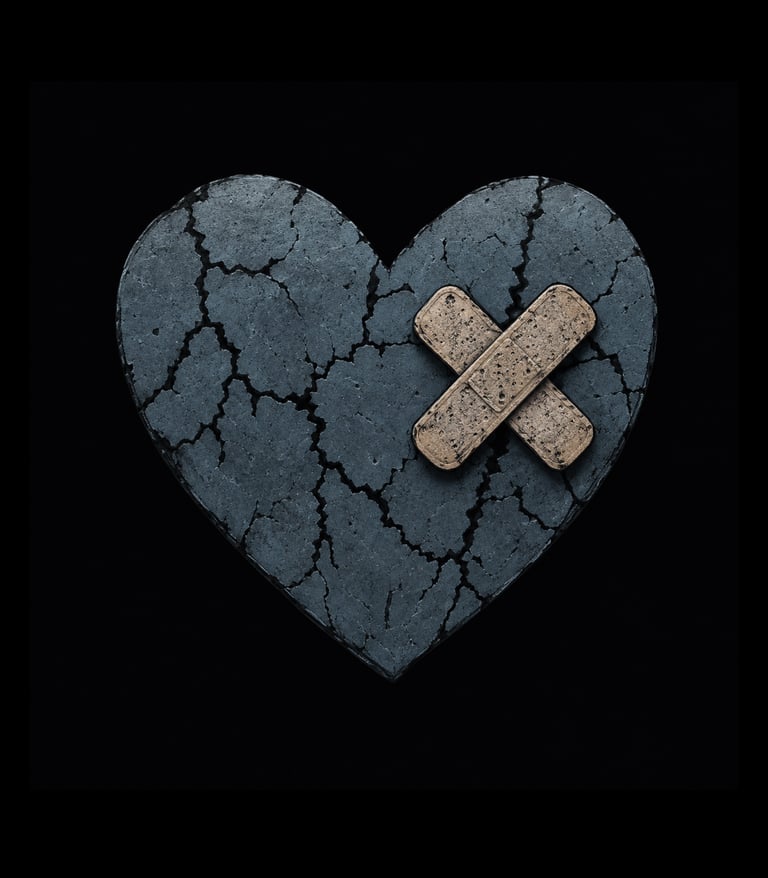
Understanding Complex PTSD can be validating, but it can also bring up difficult emotions, questions, memories, and experiences.
While education can be an important part of healing, healing rarely happens in isolation.
Many survivors find that recovery is supported not only by information, but also by connection, community, understanding, and relationships where they no longer have to carry everything alone.
The information on this page is provided for educational and informational purposes only and is not intended to constitute medical, mental health, diagnostic, treatment, or professional advice. The Healing and CPTSD Foundation does not provide therapy, counseling, healthcare, crisis services, or other professional services, and use of this website does not create a therapist-client, healthcare provider-patient, or other professional relationship. If you are experiencing mental health concerns or symptoms that are affecting your well-being, please consult a qualified healthcare or mental health professional.
DISCLAIMER
The information on this page is informed by current trauma research, clinical literature, diagnostic frameworks, and survivor experiences. Key references include:
World Health Organization (WHO). ICD-11 Complex Post-Traumatic Stress Disorder (CPTSD)
Herman, J. (1992). Trauma and Recovery
Cloitre, M., et al. Research on ICD-11 CPTSD
Karatzias, T., et al. Research on ICD-11 CPTSD
van der Kolk, B. The Body Keeps the Score
Walker, P. Complex PTSD: From Surviving to Thriving
SOURCES & REFERENCES
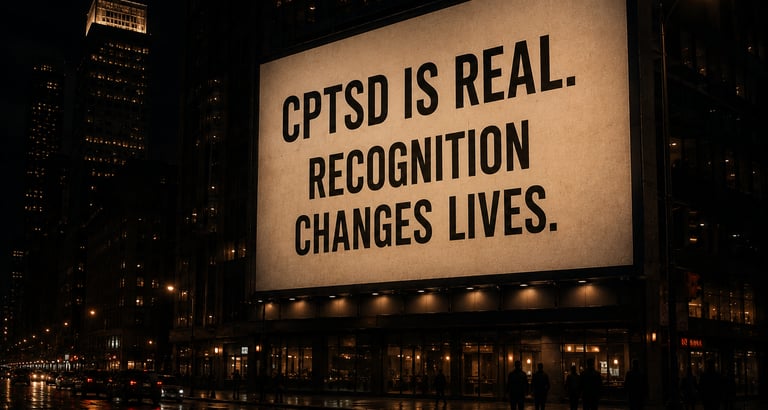
This Educational Website is an awareness program of The Healing and CPTSD Foundation. EIN: 99-2268743
The Healing and CPTSD Foundation is a 501c3 nonprofit organization dedicated to advancing awareness, education, research, and recognition of Complex PTSD. Our educational resources are informed by current trauma research, clinical literature, lived experience, and ongoing community-based data collection.
We do not provide crisis care, crisis intervention or professional therapeutic services. In the event of a crisis, please contact a crisis hotline, local crisis resource, or your healthcare provider immediately. All participants and members are encouraged to seek and maintain appropriate professional care from licensed mental health and medical providers. Our programs provide community-based peer support and are not a substitute for professional therapy or medical treatment. Participation requires that individuals are medically and mentally stable.
Nothing on this website or any associated The Healing and CPTSD Foundation website or platform, is a replacement for or supersedes the direction of your medical or mental health provider, nor is anything on this or any associated The Healing and CPTSD Foundation website or platform a diagnosis, treatment plan, advice, or care for any medical or mental health illness, condition, or disease.
The content provided is for informational and educational purposes only and is not intended to replace professional guidance from your healthcare providers. The Healing and CPTSD Foundation disclaims all responsibility for actions taken based on information provided on this site or through our programs. The Healing and CPTSD Foundation and its affiliates, officers, directors, employees, volunteers, and agents are not liable for any direct, indirect, incidental, consequential, or punitive damages arising out of your use of, or participation in, our programs and website.
Users are solely responsible for their actions and decisions, and should consult with their healthcare providers before making any changes based on the information provided. Mention of specific products, services, or therapists does not imply endorsement by The Healing and CPTSD Foundation. The content is intended for adults 18 years and older. By using our website and programs, you agree to these terms. Please review our Terms and Conditions /Privacy Policy for more information. We reserve the right to update this disclaimer and encourage periodic review.T he Healing and CPTSD Foundation reserves the right to update this disclaimer at any time. Users are encouraged to review it periodically for any changes.
COMPLEX PTSD