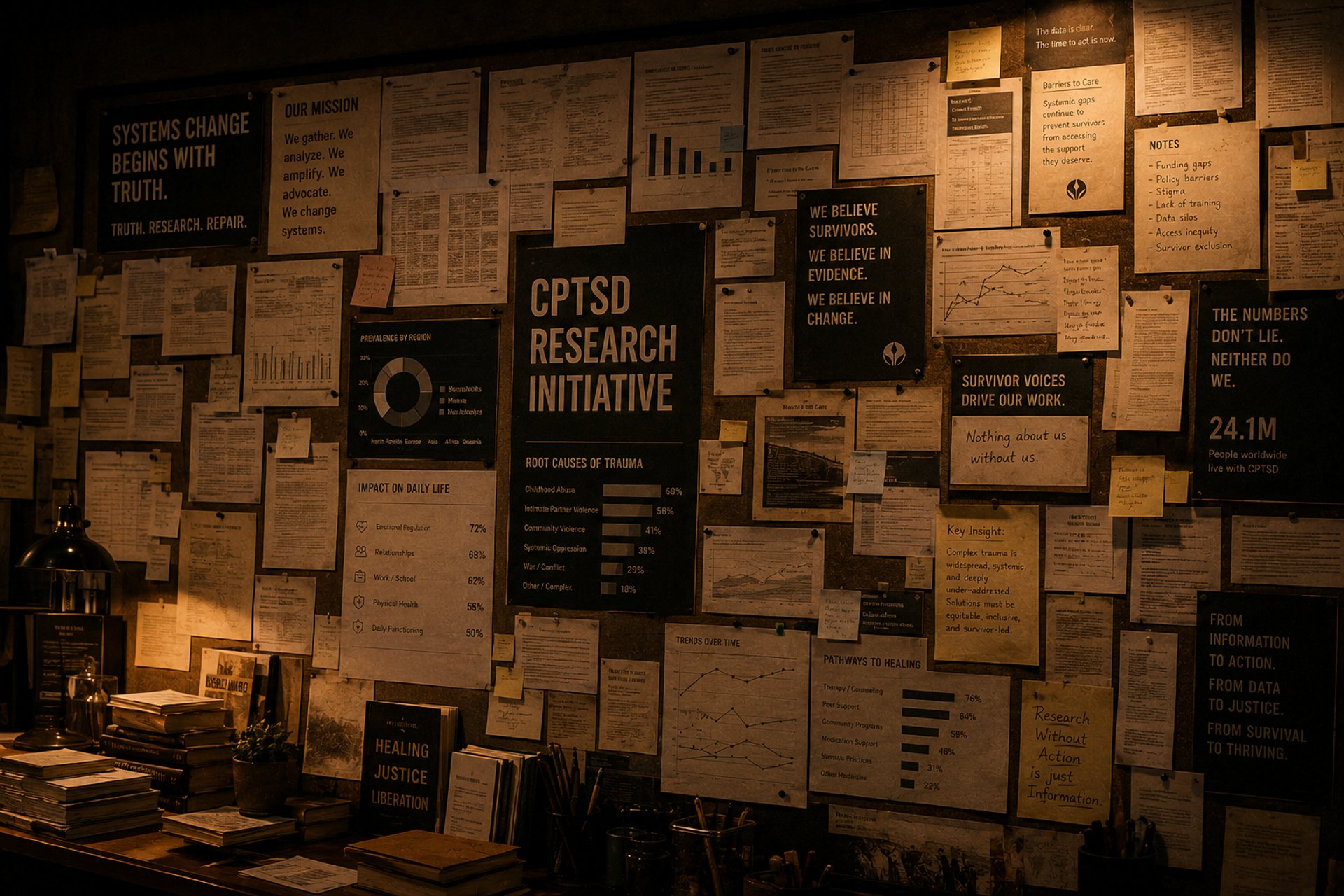
The Healing and CPTSD Foundation created this CPTSD Research Library to help make Complex PTSD research more accessible to survivors, professionals, advocates, educators, policymakers, and the public.
Our growing collection includes research studies, academic articles, reports, and publications from researchers, institutions, journals, organizations, and experts across the field. As new research emerges, we will continue expanding this library to support awareness, education, and understanding of Complex PTSD.
Disclaimer: This library is not intended to be a comprehensive collection of every study ever published on Complex PTSD (C-PTSD). Rather, it provides a curated snapshot of research that helps illustrate key findings, emerging trends, and important developments within the field.
CPTSD RESEARCH LIBRARY
COMMUNITY RESEARCH REPORTS
CPTSD CENSUS REPORTS
Annual community research projects designed to better understand the experiences, challenges, needs, and realities of people living with Complex PTSD.
SEXUAL ABUSE REPORTS
Community-based research exploring the experiences, impacts, and long-term effects of sexual abuse among individuals living with Complex PTSD.
In addition to sharing published research from the broader field, The Healing and CPTSD Foundation also conducts community-based research projects designed to better understand the lived experiences of people affected by Complex PTSD.
While traditional academic research often focuses on clinical settings, diagnostic validation, treatment outcomes, or controlled study designs, our Community Research Reports aim to capture the voices, experiences, challenges, and perspectives of survivors themselves.
These reports are developed using data collected through surveys, censuses, and community participation initiatives. They are intended to identify patterns, highlight unmet needs, elevate survivor experiences, and provide insights that may not always be reflected in existing academic literature.
Why Both Matter
Research and lived experience are both essential to advancing understanding of Complex PTSD.
Academic research helps establish evidence, validate findings, and improve clinical understanding. Community research helps ensure that survivor voices, experiences, and priorities remain part of the conversation.
Together, they provide a more complete picture of the realities of living with Complex PTSD and help inform awareness, advocacy, education, support services, and future research priorities. Learn more about our Research Philosophy + Principles here.
Community Research Reports:
Focus on lived experience and survivor perspectives.
Explore real-world challenges, barriers, and needs.
Help identify emerging trends and areas requiring further study.
Support advocacy, awareness, education, and systems change efforts.
May include large community samples that are not recruited through clinical settings.
Academic Research Studies:
Often focus on testing hypotheses, treatments, diagnostic criteria, or clinical outcomes.
Typically follow formal research methodologies and publication standards.
Contribute to the scientific evidence base surrounding Complex PTSD.
Are often conducted through universities, healthcare systems, or research institutions.
ACADEMIC RESEARCH LIBRARY
The studies below represent a small selection of influential publications that have helped define, validate, measure, and advance understanding of Complex PTSD.
Complex PTSD: A syndrome in survivors of prolonged and repeated trauma.
Foundational publication that introduced the concept of Complex PTSD and helped shape modern understanding of prolonged trauma.
Evidence for Proposed ICD-11 PTSD and Complex PTSD: A Latent Profile Analysis
Cloitre et al. (2013)
Judith Herman (1992)
Provided early evidence supporting PTSD and Complex PTSD as distinct trauma-related conditions within the proposed ICD-11 diagnostic framework.
A Review of Current Evidence Regarding the ICD-11 Proposals for Diagnosing PTSD & Complex PTSD
Brewin et al. (2017)
An Assessment of the Construct Validity of the ICD-11 Proposal for Complex PTSD
Hyland et al. (2017)
Reviews the research supporting ICD-11 PTSD and Complex PTSD diagnoses and summarizes evidence for their validity and clinical usefulness.
Examined whether ICD-11 Complex PTSD accurately represents a distinct trauma-related condition and found support for its proposed symptom structure.
Complex Post-Traumatic Stress Disorder
Maercker et al. (2021)
The International Trauma Questionnaire (ITQ)
Cloitre et al. (2018)
Introduced and validated the International Trauma Questionnaire, one of the primary tools used worldwide to assess ICD-11 PTSD and Complex PTSD symptoms.
Published in The Lancet, this article provides a comprehensive overview of Complex PTSD, including symptoms, prevalence, diagnosis, and treatment considerations.
Complex PTSD:
Assessment and Treatment
Cloitre (2021)
Provides an overview of evidence-based approaches to assessing and treating Complex PTSD, including considerations for stabilization, recovery, and long-term healing.
Systematic Literature Review of Factor Analytic and Mixture Models of ICD-11 PTSD and CPTSD
Karatzias et al. (2017)
Systematically reviewed research examining whether PTSD and Complex PTSD represent separate conditions, finding substantial support for the ICD-11 model.
Disorders of Extreme Stress: The Empirical Foundation of a Complex Adaptation to Trauma
Van der Kolk et al. (2005)
Presents research supporting Disorders of Extreme Stress (DESNOS), an influential precursor concept that helped shape modern understanding of Complex PTSD.
Trauma-Focused Treatment Outcome for Complex PTSD Patients
Voorendonk et al. (2020)
Examined treatment outcomes for individuals with Complex PTSD and explored the effectiveness of trauma-focused interventions.
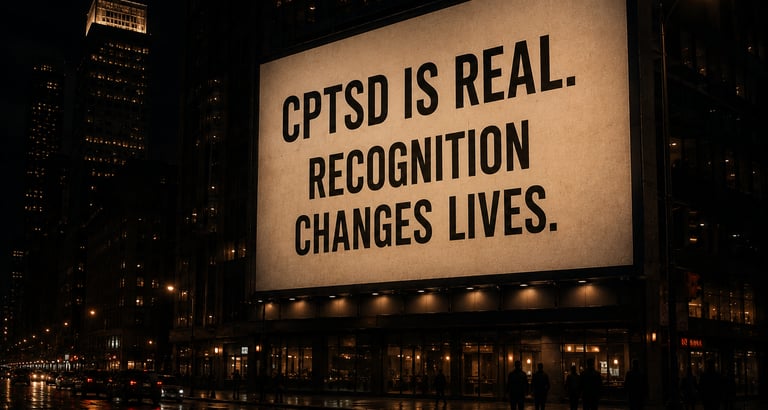
Want to Help Advance CPTSD Recognition?
Research helps us better understand Complex PTSD. Advocacy helps us create change.
The CPTSD Alliance is a coalition of survivors, professionals, organizations, advocates, researchers, educators, and supporters working together to increase awareness, advance recognition, and support systemic change around Complex PTSD.
Help Advance CPTSD Research
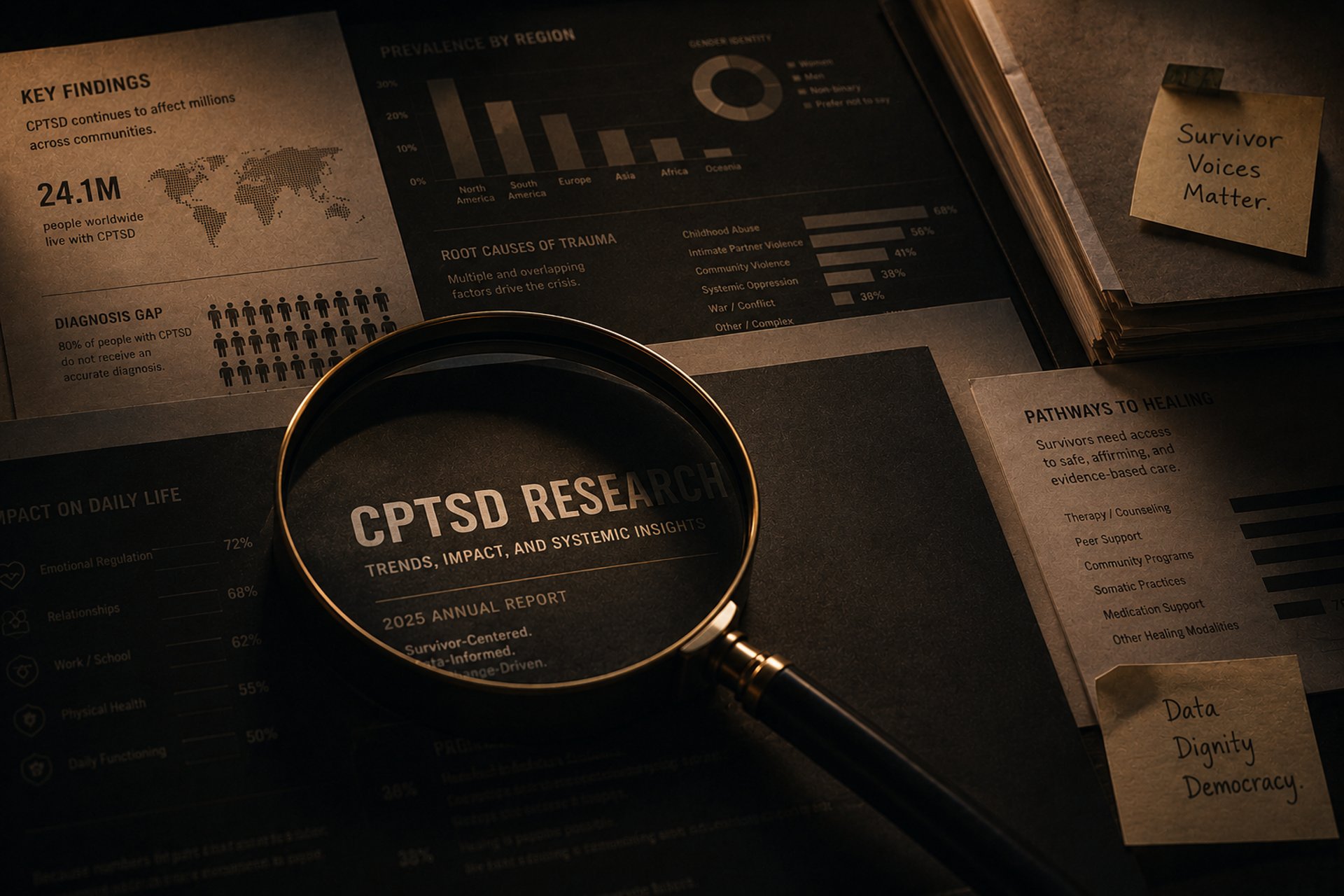
Research is one of the most powerful tools we have for increasing awareness, improving understanding, informing systems change, and advancing recognition of Complex PTSD.
The Healing and CPTSD Foundation is committed to making CPTSD research more accessible while also conducting community-based research that elevates survivor voices, identifies unmet needs, and helps shape future advocacy, education, and research efforts.
Your support helps make this work possible.
Donate today to help advance CPTSD research, amplify survivor voices, expand awareness, and support the recognition of Complex PTSD.
This Educational Website is an awareness program of The Healing and CPTSD Foundation. EIN: 99-2268743
The Healing and CPTSD Foundation is a 501c3 nonprofit organization dedicated to advancing awareness, education, research, and recognition of Complex PTSD. Our educational resources are informed by current trauma research, clinical literature, lived experience, and ongoing community-based data collection.
We do not provide crisis care, crisis intervention or professional therapeutic services. In the event of a crisis, please contact a crisis hotline, local crisis resource, or your healthcare provider immediately. All participants and members are encouraged to seek and maintain appropriate professional care from licensed mental health and medical providers. Our programs provide community-based peer support and are not a substitute for professional therapy or medical treatment. Participation requires that individuals are medically and mentally stable.
Nothing on this website or any associated The Healing and CPTSD Foundation website or platform, is a replacement for or supersedes the direction of your medical or mental health provider, nor is anything on this or any associated The Healing and CPTSD Foundation website or platform a diagnosis, treatment plan, advice, or care for any medical or mental health illness, condition, or disease.
The content provided is for informational and educational purposes only and is not intended to replace professional guidance from your healthcare providers. The Healing and CPTSD Foundation disclaims all responsibility for actions taken based on information provided on this site or through our programs. The Healing and CPTSD Foundation and its affiliates, officers, directors, employees, volunteers, and agents are not liable for any direct, indirect, incidental, consequential, or punitive damages arising out of your use of, or participation in, our programs and website.
Users are solely responsible for their actions and decisions, and should consult with their healthcare providers before making any changes based on the information provided. Mention of specific products, services, or therapists does not imply endorsement by The Healing and CPTSD Foundation. The content is intended for adults 18 years and older. By using our website and programs, you agree to these terms. Please review our Terms and Conditions /Privacy Policy for more information. We reserve the right to update this disclaimer and encourage periodic review.T he Healing and CPTSD Foundation reserves the right to update this disclaimer at any time. Users are encouraged to review it periodically for any changes.
COMPLEX PTSD